The discipline, written down Book a study →
III.
MMXXVI
Sheet three

The method

Six steps in a fixed order. Any competent team already does some of them. The discipline is doing all six, in this order, on every pass, and the order is where a large share of the arguments about marketing performance originate.

The sequence

Specify, instrument, build, measure, tolerance, revise

Each step carries a rule and the specific failure that rule exists to prevent.

RefStepWhat happensFailure prevented
01

Specify

The rule. A specification names the figure, the date it is due, and the reading that would prove the plan wrong.

Write the output the system has to produce, in figures, with a date on it, before anything is built.

PreventsA programme judged in hindsight against whatever it happened to produce.
02

Instrument

The rule. Nothing launches on a configured integration. Only on a proven one, watched end to end by a person.

Fit the measurement, then watch a real event travel from the page to the report and confirm it arrived with its fields intact.

PreventsWeeks of data describing a tracking install rather than a market, quoted later as a baseline.
03

Build

The rule. One complete path first, however small. Width comes second, never before the path closes.

Assemble the thinnest complete path from first contact to recorded outcome, then widen it.

PreventsA large launch with twelve components and no way to tell which of them did the work.
04

Measure

The rule. The cadence is set in the specification and does not change because a reading is inconvenient.

Take the reading on a fixed cadence, from the instruments, never from recollection.

PreventsReporting that appears when the figures are good and goes quiet when they are not.
05

Tolerance

The rule. Out of range triggers an action named in advance, by a person named in advance.

Compare the reading to the pass band that was written before the reading existed.

PreventsA tolerance reinterpreted after the fact to accommodate the result that arrived.
06

Revise

The rule. One variable per pass. The variable log is part of the deliverable rather than a private note.

Change one variable, log it against the reading, and run the sequence again.

PreventsFour simultaneous changes and a result that belongs to nobody.
Why the order carries the weight

Step two before step three

A large share of the disagreements about marketing performance trace back to instrumentation fitted after the thing it was meant to measure.

Fit the instruments after launch and the first weeks of data record a configuration in progress. Those weeks then become the baseline every later result is compared against, so the programme is measured against its own worst period and nobody notices for two quarters.

Fit them first, prove a test event arrives, and the first reading is a reading. Everything downstream depends on that single ordering choice, which is why it is step two rather than step five.

Working rule

No campaign launches until somebody has watched a real event travel from the page to the report

The same rule extends past tracking. It covers a form posting into a routing rule, a webhook, a sending domain, a tag moving between accounts, and every connector anybody ever describes as configured. A configured integration and a working one are different states, and only one of them has been observed.
Cadence

What gets read, and how often

IntervalReading

Weekly

Demand volume, changes on the answer surfaces, and the rate at each junction through conversion. Read for a step change, never against the tolerance.

Monthly

Cost per qualified opportunity, instrumentation integrity, and the variable log. This is the only reading compared against the written tolerance.

Quarterly

The specification itself, and whether any subsystem should be rebuilt rather than tuned.

A weekly figure on a business to business programme is mostly noise, and treating it as a verdict produces panic changes that break the one variable per pass rule inside a fortnight.

Human gates

Five decisions that never go to a machine

The machine prepares evidence at scale. A person keeps the call. At each of these, the work stops, the evidence is presented, and somebody named signs it.

RefGateWhy
G1

The specification

Nobody signs a target figure except the person accountable for producing it. A specification handed down and accepted quietly is not a specification.
G2

Anything a machine flagged

A model produces candidates, never findings. Every flag arrives with its evidence attached and a named person rules on it.
G3

Where a competitor genuinely wins

On any comparison, the places the other side is actually better get surfaced and a human decides how to handle them. A machine will smooth that over every time.
G4

Any spend that scales with a parameter

Where cost scales with a page limit, a result count or a crawl depth, the expected cost is stated with its arithmetic before the call, and approved for that call alone.
G5

The final read

Before anything is published, sent or handed over, one person reads the whole thing with the run conditions in front of them.
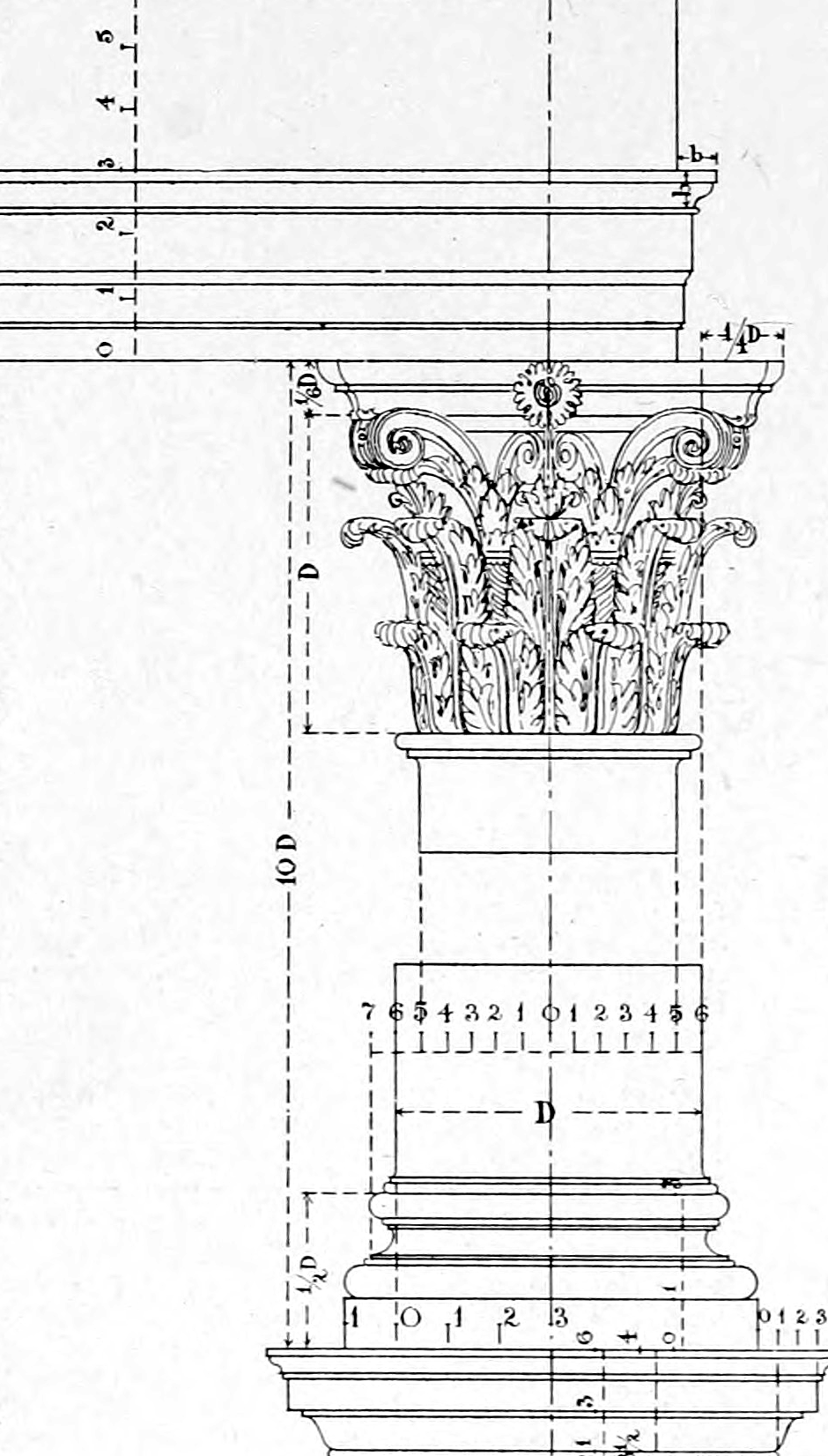
Plate III  ·  Corinthian order, elevation with scale  ·  Public domain
The loop

Why the sequence compounds

Step six feeds step one on the next programme. A rule proven on one system starts the next one at a higher standard of evidence, so the sequence is never finished and that is the point of running it.

The practical form of this is a ledger. Every test that produced a clean read gets written down with the client, the date and the condition it was true under. The ledger is what turns a decade of separate engagements into a discipline instead of a set of anecdotes, and it is the reason the same mistake stops being made.

Next

The method runs on four subsystems.

What each one produces, the three readings taken on it, and the way each one fails.